
Access the information in this section in other formats.
After a stroke, starting to be more active can be a massive boost to your recovery and your confidence. Almost anyone can find a way to add movement into their daily life. You can be active around your home or find an exercise class you enjoy.
You can set your own goals to help you get motivated.
Whether your stroke was recent or many years ago, moving more can make a difference to your wellbeing.
Being more active can:
- Help you to stay healthy and feel good.
- Improve your balance and muscle strength.
- Reduce fatigue and lessen pain.
- Improve your mood.
- Build up stamina.
- Reduce the chance of another stroke.
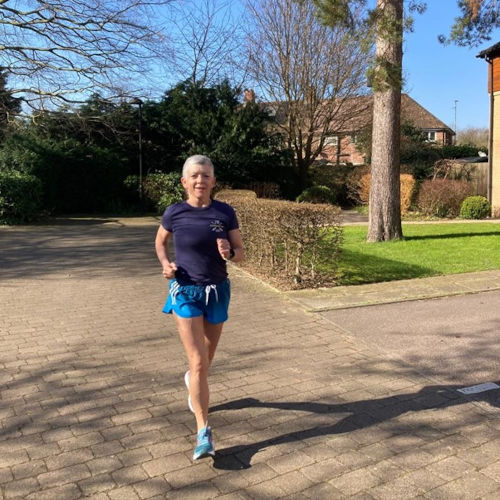
‘I joined my local Park Run as a motivation to help with my walking. Exactly a year to the date of joining, I ran my first 5K. I am so proud of this achievement!’
Sarah, stroke survivor
Find what works for you
Stroke is different for everyone. The impact of your stroke is unique to you, and you will have your own reasons for wanting to get active. People sometimes tell us they have worries or questions about exercising after a stroke.
Some effects of stroke could make it harder to be active, like fatigue or problems with your balance, mobility or bladder. But with support, you can find out what you can do and find things you enjoy.
Whatever your individual abilities are, you can try increasing your current level of activity. Even a small amount extra will make a difference.
If you’re not sure which activities are safe for you because of a disability or a health condition, ask your GP or therapist for advice. Physiotherapists and occupational therapists can help you work out new ways of doing things.
If you need help finding support, you can call the Stroke Support Helpline on 0303 3033 100.
Exercising after stroke
I'm worried that...
Sometimes people worry being active could cause another stroke. But the opposite is true. Moving and being active is a great way to stay healthy and avoid another stroke. So unless your doctor tells you otherwise, moving and being active is safe, and it could make all the difference to your health and wellbeing.
You can still be active even if your balance is a problem. A therapist or trained exercise coach should be able to give you advice on safe movements and how to improve your balance. You can do activities on a chair or a mat, or use machines if you go to a gym. If you are standing, hold onto a chair back or lean against a wall. Your GP can refer you to a physiotherapist if you need help with balance problems.
You might feel too tired to be active, but regular exercise can actually help give you more energy, better sleep and make you feel less fatigued. Try a few different activities and find out what you enjoy and what works for you. Start slowly, and build up over time, to avoid making the fatigue worse. Overall energy levels should improve, but you might need to build in time for some extra rests during and after activities.
As long as you do things that you’re capable of, you can move and be more active. Do not avoid being active because you’re worried.
If you have any health problems such as atrial fibrillation or diabetes, it’s a good idea to speak to your doctor before starting to become more active. If you’re not sure what you can do, seek advice from a professional like a therapist or trained exercise coach. An occupational therapist can help you find new ways of doing things if you need to adapt an activity you previously enjoyed.
If you have high blood pressure, physical activity can help to reduce it over time.
When you do something that makes your heart beat faster, such as running, your blood pressure goes up, but goes back down when you rest. By exercising regularly, you actually make the heart stronger and more efficient. Over time, your resting blood pressure can go down to a healthier level.
However, if you have very high blood pressure, you should speak to your doctor before starting to be more active, to make sure it’s safe for you. Ask your pharmacist if your medication could affect you during exercise.
If you have a number of health problems together like diabetes and a heart condition, and you’re not sure what level of activity you can do, speak to your doctor.
Where to get help and information
Stroke Support Helpline
Our Stroke Support Helpline is for anyone affected by a stroke, including family, friends and carers. The Helpline can give you information and support on any aspect of stroke. Call us on 0303 3033 100, from a textphone 18001 0303 3033 100 or email helpline@stroke.org.uk
Getting started with movement and activity
- The Chartered Society of Physiotherapy has ideas and videos from physiotherapists about moving, being active and having fun.
- This Girl Can has advice on ways to feel more confident about your body by being active, plus how to get started.
- We Are Undefeatable provides inspiring stories and practical resources to help you be more active when you have a health condition or disability.
Walking
Ramblers Association (England, Scotland, Wales) has online resources about walking outdoors with a health condition or disability, plus a search tool for local groups.
- Tel: 020 3961 3232
Inclusive sports and activities
- Disability Sport NI, Tel: 028 9046 9925
- Disability Sport Wales
- Every Body Moves has a postcode search tool to help find inclusive sports and activities near you.
- Scottish Disability Sport, Tel: 0131 317 1130
- Sportability (England), Tel: 07305 047 533, Email: info@sportability.org.uk
- Swim England has information on swimming after a stroke.
Accessible resources
The information in this section can also be accessed in the following formats:
- PDF.
- Large print (Word document).
- Order a printed copy from our Shop.
- To request a braille copy, email feedback@stroke.org.uk.