
Life after a stroke can look very different. It might be difficult to do things you used to. But you can still achieve new things or find other ways of doing things. This is all part of your recovery.
You’ll have your own aims. Maybe you want to re-learn how to make a cup of tea. Or increase your confidence in communicating. Or get active after stroke. Whatever it is, try to be patient with yourself as recovery can take time.
Members of your NHS stroke team will help you, and your family or carers, to identify individual goals. Some stroke survivors have told us they prefer using the term ‘milestone’ instead of ‘goal’ because it feels like a step to work towards before moving on to the next. Whereas they say goal feels like an end point. You might also hear milestones or goals being called aims, achievements or objectives.
The Stroke Support Helpline can also work closely with you to understand what is most important to you and support you to take the next step. You can support your recovery journey by reaching achievements step by step.
You do not have to see the whole staircase, just take the first step.
Martin Luther King

Why is it important to set milestones?
Setting milestones can help you to track progress and stay focused. It can help you to overcome obstacles and reach both short and long-term aims.
[After two strokes at 36 years old], things were very hard because I couldn’t get back to the way I wanted immediately. I wanted to make progress, get to the next level and get back to doing things, now!
One of my goals was to be able to walk out to the car. I didn’t want to rely on sitting in the wheelchair and being dragged out to the car every time we wanted to go out. Now I can, and we’ve done it multiple times.
Don’t be in a rush to get where you want to go. Take it a little bit at a time. If you go too fast, you’ll trip over yourself. Take your time.
- Colt, stroke survivor
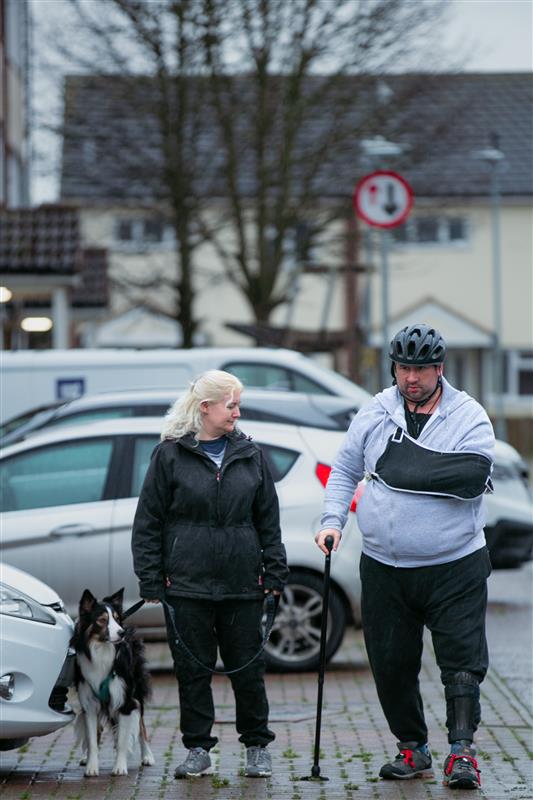
How can setting milestones help to reduce my risk of another stroke?
Many stroke survivors tell us their biggest fear is having another stroke. Setting milestones can also be an effective way to help manage risk and prevent another stroke.
For example, smoking, being overweight and drinking too much alcohol are all risk factors for stroke. If your aim is to stop smoking or stay a healthy weight, planning a milestone around a lifestyle change could help you to reduce this risk factor. In turn, this could reduce your risk of another stroke.

How can I identify realistic milestones?
It can be difficult to know where to start or how to keep going. You are more likely to identify a realistic aim and stick to it if it is important to you. The tips below can help you to identify and set a realistic milestone.
Tips for setting achievable milestones
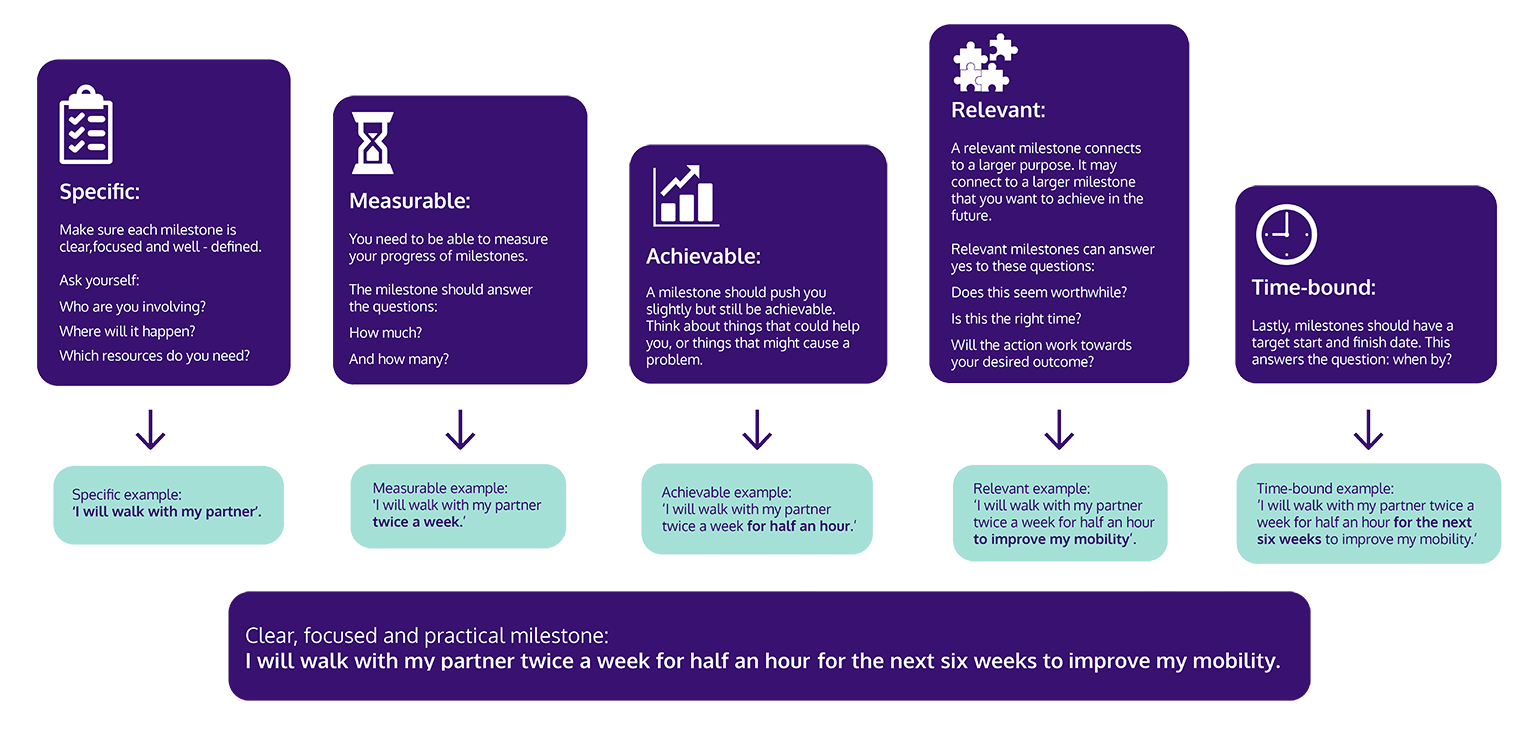
Keep your milestones clear, focused and practical
Try to make sure your milestones are
- Specific,
- Measurable,
- Achievable,
- Relevant and
- Time-bound.
This is proven to help achieve objectives in all areas of life, not just recovery. It helps you stay on track by ensuring your aims are clear, focused and practical.
First, start by asking yourself: Which area of recovery am I focusing on? Examples:
- physical abilities: fatigue, muscle weakness, swallowing problems, balance, vision problems, changes to taste and smell
- cognitive function: memory and thinking, concentration
- emotional and behavioural changes: mood, loneliness
- communication and aphasia
- daily living: independence, self-care, driving, exercising, holidays
How can I make my milestone challenging but achievable?
Keep it realistic and relevant to you. For example, UK guidelines recommend two and a half hours of moderate exercise a week for adults. That’s equal to around 20 minutes a day.
But this may be unrealistic if your mobility has been affected by stroke or if you have not done much exercise before.
Make your milestone visible
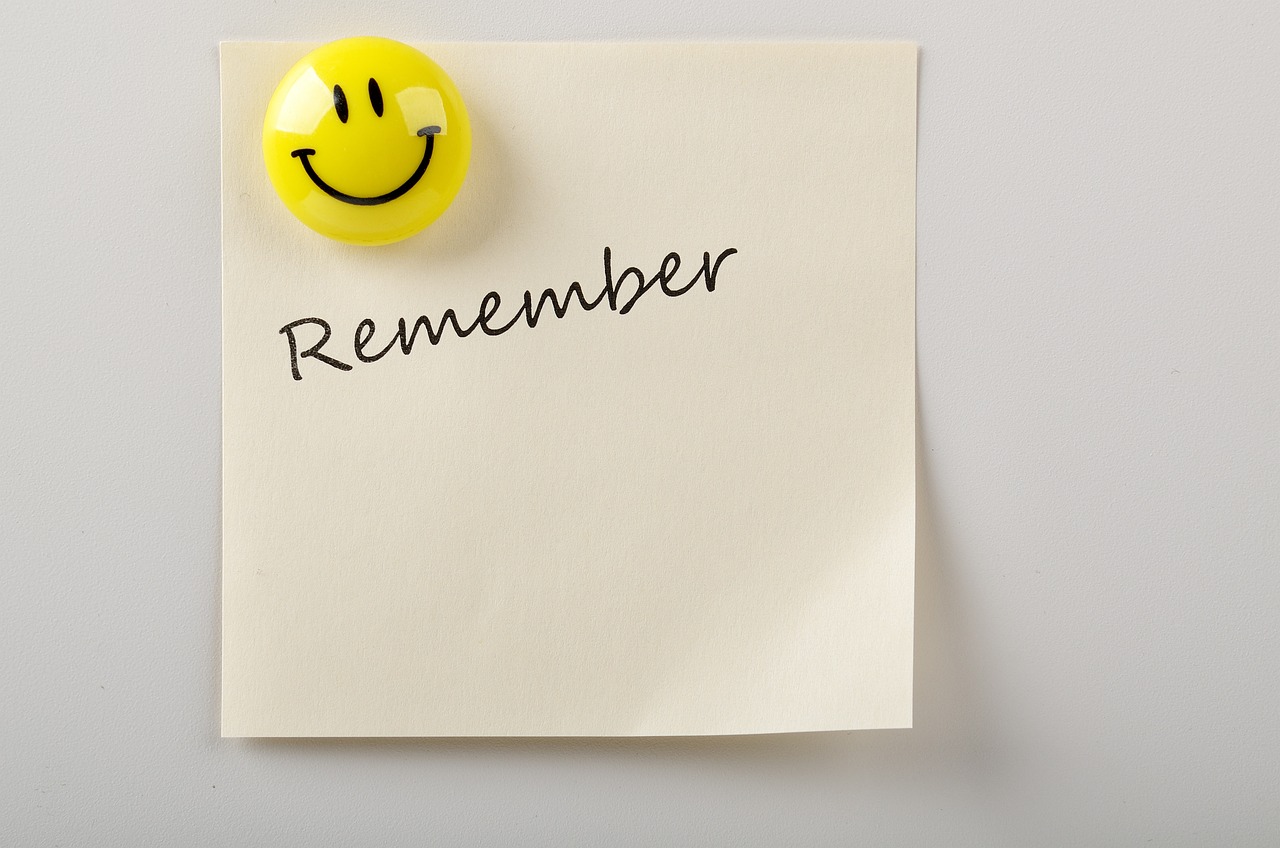
There’s a reason for the saying ‘out of sight, out of mind’. We are more likely to remember to do something if it’s something we see regularly. Why not try writing down your milestone and displaying it somewhere you look every day? For example, on your wardrobe door or the fridge.
We have created a handy milestone action planner which you can download and fill out. You could print it and stick it somewhere you can see it.
You could even try setting a reminder on your phone to work towards your goals at a suitable time.

Make your milestone enjoyable
At the start of your recovery, milestones might be more focused on coping. But as you move from surviving to thriving, you might be able to set more enjoyable ones. If you have an enjoyable aim, it will help you stay motivated and achieve it more easily.
For example, if your milestone is to improve your communication, think about fun ways you can do this. Do you enjoy sitting down to have tea or coffee with people? You might find meeting for tea and cake with your local stroke support group a low-stress way of practising communication.
You can always keep a communication support tool on you when you go out, to help you feel more confident.

Try not to compare yourself
It can be so easy to look at others' progress and feel disheartened. But every stroke and the effects for each person are different. Each of our circumstances is also very individual. It’s impossible to directly compare.
Plus, it’s important to remember we might only hear about the times people succeed. Often, we don’t see the reality and the struggles people have to get there. Social media is a perfect example of this. People tend to post positive times in their lives and rarely negative. So, try to focus on yourself and celebrate your successes.
Plan milestones that involve others

Having goals you work towards by yourself is great. It can also be good to set goals you can do with therapists, friends or family members. This can make working towards a milestone more enjoyable.
It can also help you to stay motivated. Someone doing an action step with you or supporting you can help you stick to it. This is because they encourage you to follow through with a commitment you’ve made.
Maybe you can both set a milestone that you work on together. For example, you and your family members could set goals to help you all follow a healthier diet.
Reflect on your milestones
Reflecting on a milestone is as important as taking the steps to achieve it. Stroke team members will review goals with you as part of your recovery.

Reflection will help you think about where you could’ve done things differently. It will also help you to celebrate how far you’ve come. Perhaps you made progress but pushed yourself a little too far and felt fatigued.
Congratulating yourself for what you have achieved can encourage you to keep going. Ask yourself: what can I do this month that I couldn’t last month? Once you have reached an aim or overcome an obstacle (no matter how small) try to celebrate your success.
Reflection is a skill, but it is important before moving on. Here are some tips for reflecting:
- Regularly set aside time by yourself or with a loved one, or a stroke team member.
- You may find it useful to make notes about your progress in a diary or on your phone to help you reflect.
- Write your thoughts in the reflection section of our milestone action planner.
- Fill in a ‘My Positives Sheet’ to help you notice achievements and the progress you’ve made.
- Talk with other stroke survivors to share your ups and downs of your journey. You could do this either in a group or on our Online Community.
What to do if things change

It can be reassuring to remember things are changing for everyone all the time. Nothing is constant. So, if things change for you or you go off track, try to think about how you can get going again. It’s about adapting to your current situation.
You can stop doing something if it's not helping you reach your achievement. And if your milestone changes, smaller goals might also need to be reviewing and changing.
If you haven’t reached a milestone, it might not be about revising the activity itself but the timeframe.
It's important to remember no one gets everything perfect the first time. Don't be discouraged if you don't achieve your goals right away.
If you find you have got a bit stuck, reach out and ask for help.
You could contact our Stroke Support Helpline for information or guidance which could help you. We can also connect you to people who have had a stroke by phone, online or through one of our stroke support groups. You do not need to face recovery alone. We’re here to support you and your family whenever you need us, throughout your stroke recovery. Simply call us on 0303 3033 100 or email helpline@stroke.org.uk.
Acknowledgements
Stroke survivors have helped to co-produce this information. It has been reviewed by medical professionals
Document publication and review dates
Publication date
January 2025
Next review date
January 2027