
A stroke can cause weakness or paralysis on one side of your body and problems with movement and carrying out everyday activities. The information on this page looks at how physiotherapy can help with stroke-related problems, what it involves and how to access it.
This aphasia-friendly video provides information on moving after a stroke and the help and support available. Return to the aphasia friendly information page.
Benefits of physiotherapy after a stroke
If you have lost movement in part of your body, physiotherapy can help you learn to move so that you can get around and be more independent. Physiotherapy can also help improve your balance and confidence in moving around, and reduce your risk of falls.
A stroke can affect your ability to move and get around in a number of different ways. These may include:
- Weakness or paralysis down one side.
- Changes in sensation, such as heavy limbs, numbness or pins and needles.
- Balance problems.
- Shoulder pain or partial dislocation.
- Muscle stiffness, or muscle spasms known as spasticity.
Physiotherapists often work with other healthcare professionals to help you with the range of problems that stroke may cause. Physiotherapists who specialise in conditions caused by changes in the brain, such as stroke, are known as neurological physiotherapists or neuro physios.
Neuroplasticity
Stroke damages some of the connections inside the brain, but the brainhas the ability to re-wire itself, allowing you to relearn things like walking, talking and using your affected arm. This is called neuroplasticity. You can help this process by practising rehabilitation activities recommended to you by your physiotherapist and stroke team.
When and where can I have physiotherapy?
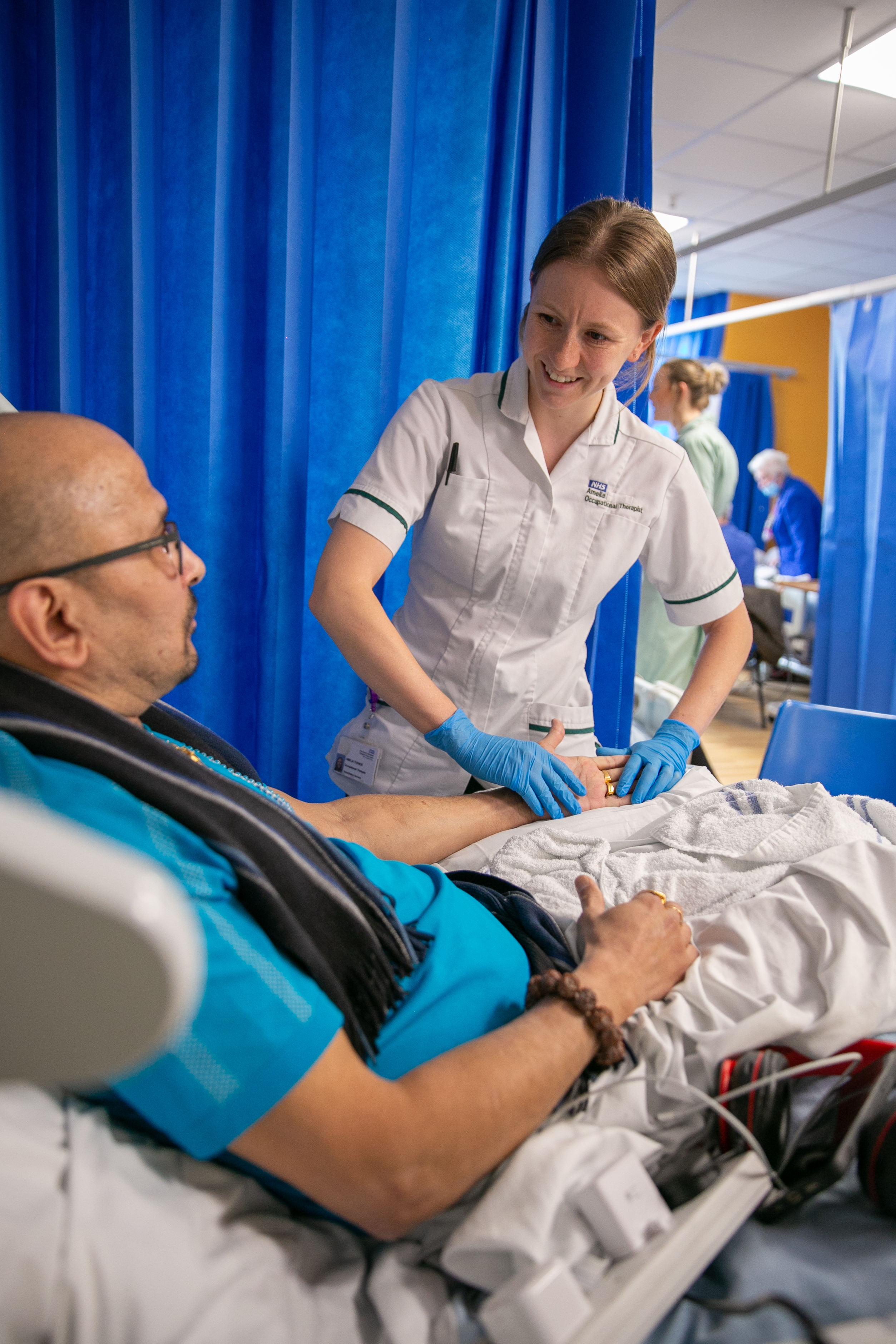
If you were admitted to hospital following your stroke, physiotherapy will begin as an inpatient, most likely on a stroke ward. From 24 to 48 hours after a stroke, if it’s safe to do so, you will be encouraged to move around as much as you are able to. Depending on how your stroke has affected you, this may be on the bed, sitting in a chair, walking or continuing with your previous activities.
Once you are ready, you should progress to more active sessions. Facilities in hospitals vary, but these may happen in a rehabilitation area or physiotherapy gym.
You might be moved out of the stroke unit to a rehabilitation unit to continue your treatment. In some areas, a specialist community rehabilitation team will support you to continue your recovery at home. Other areas offer a transition period between hospital and home in an intermediate care centre.
If you were offered Early Supported Discharge from hospital, you should be supported by a team of professionals to continue your recovery and rehabilitation at home. You should get the same amount and intensity of therapy as you would in hospital. This service typically lasts for up to six weeks. You might go on to a community rehabilitation team if you need longer-term support after your stroke.
You may continue your physiotherapy as an outpatient, with therapy provided in person or remotely through online appointments. Online appointments can include individual advice from a therapist or group activities. You might hear this called telerehabilitation. An online appointment might take place via a video link, which you can join on a mobile phone, tablet or laptop. Your healthcare team should make sure you have the right equipment and offer you any support or training you need with the technology. If a remote online appointment is not suitable for you, you will be offered therapy in person.
If you didn’t have physiotherapy after your stroke or your needs change after leaving hospital, you can ask your GP if they can refer you to a physiotherapist for help with stroke-related problems.
What does physiotherapy involve?
In the early stages, physiotherapy may focus on preventing complications and helping your recovery.
Good care in the early days is important to help prevent joint stiffness, muscle tightness and pain. A physiotherapist will advise on how to reduce the risk of complications and to move around if your mobility is limited. For example, how to roll over or to get in and out of bed. They can advise on when and how you can get up and about and if any equipment, such as a walking stick or frame, might help you.
If you have one-sided paralysis, correct positioning is important to prevent spasm or injury. If you’re unable to move, you will need a special mattress and the nurses may need to help you change position at regular intervals (usually every two hours) to prevent damage to your skin.
If you are unable to move, you may be given chest physiotherapy to keep your lungs clear. If possible, you may be helped to sit in a chair, as this will help avoid blood clots in your legs, improve your breathing, strengthen the muscles around your middle, and help your recovery.
Physiotherapy can also help you find ways to enable you to do things that are important to you, such as getting in and out of bed, moving safely around your home, or doing sports or hobbies.
Your physiotherapist will work with you to set goals, or priorities for things you want to be able to do. Larger goals, such as walking, may be broken down into smaller steps, starting with sitting and standing independently. This gives you shorter-term targets to work towards with your rehabilitation team.
Your goals will depend on how your stroke has affected you, as well as your abilities and interests before the stroke. Your treatment is focused on the things that are important to you.
- Read our information on how to set goals, along with a downloadable goal planner.
Depending on how much you are able to do, your physiotherapy may include moving around your bed, then from the bed to a chair. It can also include standing, balance and walking with and without support. For many people, this is a gradual process and it’s important to get each step right so you’re safe and regain your confidence.
Moving helps your balance, aids breathing and skin care, and helps prevent blood clots in your legs. Your physiotherapist will advise on the best type of seating and positioning for you. They can show you how to use cushions for support, particularly for a weak arm. If you cannot stand, the physiotherapist and clinical team may use equipment to help you get onto your feet, if it is safe.
Physiotherapists may also use their physical skills to help you stand with them. This will give you the opportunity to support your own weight and encourage the muscles of your trunk, hips and legs to work. Your physiotherapist may not encourage you to walk straight away if you need time to recover your strength and stamina.
During physiotherapy, you may do exercises to strengthen weak muscles and build up your stability and stamina. Stretching exercises can reduce muscle and joint stiffness. You may also work on specific skills that you need to improve. For example, if you’re having difficulty keeping your balance, you may be asked to practise standing up. If you have difficulty lifting your arm, you will need to do activities that make you lift and use your arm. If you are having difficulty walking, you need to walk as much as possible.
There are many ways to exercise and practise. You may work on a one-to-one basis with a physiotherapist, particularly on the tasks and the movements you’re learning to do. You may also work with a physiotherapy assistant or in a group.
It’s important to practise exercises or activities on your own, outside of physiotherapy sessions. This can help with your recovery. You will be given exercises by your physiotherapist that you can do either independently, or with support from ward staff, as well as your family or friends. You will be supported with written instructions, diagrams or videos to watch on your mobile, tablet or laptop.
Although many people regain the ability to walk, some do not and others are only able to walk short distances with support. If this is the case for you, your physiotherapist and occupational therapist will provide walking aids, such as a stick or ankle splint and, if necessary, a wheelchair. They will teach you and your family or carers how to use them.
After an assessment, they will also arrange for any other equipment you may need, such as a hoist to help you get in and out of a chair or bed. You may need adaptations to your home, such as a ramp or wider doors.
- Our Equipment and Accommodation pages have more information.
In most cases, if you wish, it’s possible for members of your family, friends or carers to attend rehabilitation sessions with you. Your family and friends can also support and encourage you with your rehabilitation activities outside of therapy sessions. If you need help with daily tasks such as getting in and out of bed or using the stairs, your physiotherapist can teach your family or carer how to help and how to use any equipment you need.
The physiotherapists helped me to stand at first, then after a few weeks, build up to take my first steps. I remember my first aided walk being about five metres. It’s here where I realised, I needed to set small goals, to build on the big goals.
Adam, stroke survivor
How much physiotherapy should I get after a stroke?
The more therapy you have and the more active you are after a stroke, the better. Stroke guidelines recommend you should receive at least three hours of therapy to help with your movement goals, at least five days a week, if you’re able to do so. However, we know many people in the UK do not receive this amount of therapy, and that it may vary depending on where you live.
Everyone’s stroke and recovery are different, so rehabilitation should be planned to fit your needs. That means thinking about your other health issues, how active you were before the stroke, how tired you feel now, what you can manage, and what’s important to you. Fatigue can affect how much activity you’re able to do, so you need to plan rest as well as activity into your daily rehabilitation routine.
Staying active outside of therapy sessions
When you get home, try to keep as active as you can each day. Moving and being active can help with your recovery, improve your wellbeing and reduce your risk of another stroke. Your physiotherapist can advise you on ways to build up your activity levels and improve overall health. Some areas offer an exercise referral scheme or specialist rehabilitation groups. Ask your GP surgery or physiotherapist what’s available near you.
- Our getting active pages have ideas and videos about moving more and staying active after a stroke.
When will my physiotherapy end?
The fastest recovery takes place in the first weeks and months after a stroke. But we know that improvements can and do carry on for years. You can help your recovery by practising exercises, staying active and using the skills you have re-learned. Improvements can be due in part to you becoming fitter and stronger as time passes, but they are also due to the brain rewiring itself.
When you start physiotherapy, you set goals and plan exercises with the therapist. Therapy should finish when you reach your goals, such as walking or improving your balance. It can also end if the therapist assesses that further therapy would not benefit you, because the therapy is not helping you make progress. You should have therapy for as long as you need it, but this is not always the case in all areas of the UK.
At any time, if new problems arise or old ones return, you can ask your GP to refer you to a physiotherapist. In some areas, they offer a ‘direct referral’ system, where you can contact the team or department directly to make an appointment without having to go through your doctor.
- If you find it hard to get the support you need, call our Stroke Support Helpline for guidance and information.
Private physiotherapy
You may wish to consult a private physiotherapist if you feel you could benefit from further therapy, provided you’re not having the same treatment from an NHS therapist. If you have an NHS therapist, let your NHS therapist know you are also seeing a private therapist, both as a courtesy and to ensure you continue your treatment and goals.
Check the private therapist has lots of experience of stroke rehabilitation and the appropriate qualifications. Check they are registered with the Health and Care Professions Council (HCPC). Look for the initials MCSP (Member of the Chartered Society of Physiotherapy), MACPIN (Member of the Association of Chartered Physiotherapists in Neurology) and SRP (State Registered Physiotherapist) after their name.
Make sure you understand the costs, how many sessions are likely to be involved and whether you can be treated at home.
- Our private treatment page has more information.
Resources
The information on this page can be accessed in the following formats:
Download this information:
- Word document
- Order a printed copy from our shop.
To request a braille copy, email feedback@stroke.org.uk.