
Your brain is amazing! Although brain cells that have been severely damaged or have died cannot grow back, your brain has the ability to re-wire itself. This allows you to relearn things like walking, speech and swallowing. This process is known as neuroplasticity. It begins after a stroke, and it can continue for years.
How does it happen?
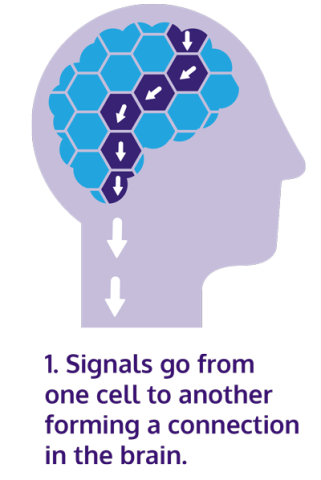
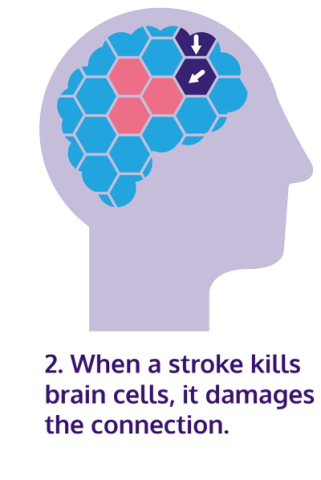
Brain cells send messages around the brain. A stroke damages some of the connections inside the brain, and between the brain and the body.
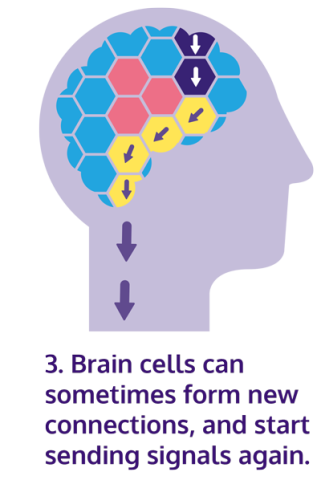
When you repeat therapy activities, it encourages the brain to start making new connections in the healthy parts of the brain. Building up those connections makes your brain better at controlling your body, and lets you do more things you want to do.
You can help this process by practising rehabilitation activities. There is no time limit on neuroplasticity, and it doesn't only happen during therapy. Every time you take an extra step, say a new word, or do a hand exercise, it helps the brain make new connections.
What does this mean for recovery?
Every stroke is different. Not everyone can make a complete recovery, but many people make progress with their individual goals like getting stronger, more mobile or more independent. With the right support, many people can gain confidence, and find new ways of doing things.
Although the stroke disabled me in lots of ways, it also rewired my brain in a positive way.
When I look back at what I've achieved, I know I can overcome everything else there is ahead. The road is long but not impossible.
Daniel, stroke survivor

When recovery seems to go backwards (decompensation)
When the brain 'rewires' itself, the new connections aren't always as strong as the original ones. Sometimes, if you are tired, unwell or under stress, the new connections in the healing brain can struggle to keep up.
This can lead to problems appearing to get a bit worse. For example, at the end of a long day, someone might drag their leg more than usual, or slur their speech.
This is known as decompensation. It can happen when your brain is working extra hard, and the signals inside the brain may be less strong.
It's temporary, and you should find that things soon improve. If they don't, contact your therapist, stroke nurse or GP.
If you suddenly have more serious problems, or any new stroke symptoms appear, don't wait to see if they get better. Call 999.
Accessible formats
Access information about neuroplasticity and recovery in various offline formats:
- Download our PDF or large print Word document.
- Order your printed copy from our shop.
- Request a braille or CD copy by emailing feedback@stroke.org.uk.