
All the ways we can help you
We're here to support you on your path to recovery. Our support hub brings together all our online and in-person services, advice and guidance for stroke survivors and their families.
Access the information in this section in other formats.
Pain is a common problem after stroke. It can happen soon after a stroke or it may develop later on. You may have muscle and joint pain, headaches or painful sensations like pins and needles.
Pain can have a significant effect on your quality of life, emotional wellbeing and ability to do rehabilitation activities. Pain may also impact sleep, work and other daily activities. Everyone feels pain differently and responds in their own way. How you feel pain can also be influenced by factors such as your mood, stress or tiredness.
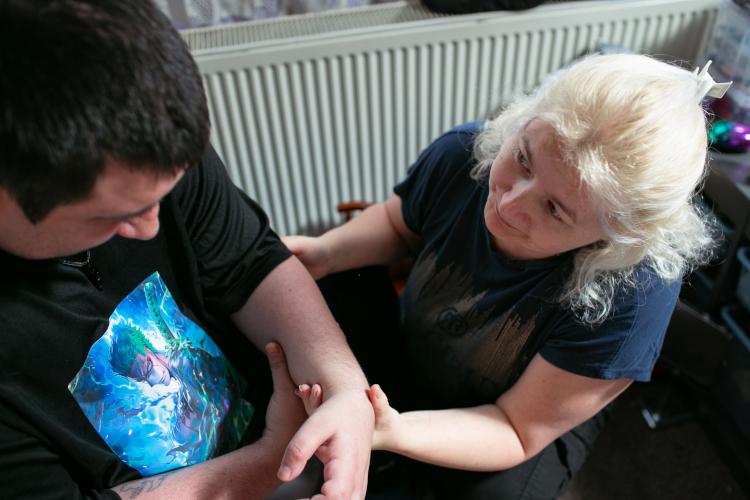
Yes. There are effective treatments and ways of controlling pain, so it’s important to seek help. Tell your doctor or therapist about the pain and how it affects you. They can help to find out the cause of the problem and get the right treatments.
Depending on the cause of the pain, treatments like medication and physiotherapy are often helpful. But for some people, post-stroke pain can last a long time. You may hear pain that lasts or recurs for more than three months described as ‘chronic pain.’
There are also techniques for managing long-term pain with help from pain clinics.
Some of the main ways stroke survivors experience pain include:
A stroke can damage the way the nerves control your muscles. This can cause pain in muscles and soft tissues.
A swollen hand can happen if you are not moving your hand very much, or are unable to move it. Older people and those who had more severe strokes are most likely to experience this condition. The swelling may happen because fluid builds up in the tissue if the muscles are not moving around. It’s more likely to happen if the hand is hanging downwards. Painful swelling can make it more difficult to move your hand and arm, which can make spasticity worse.
To overcome this problem, it’s best to raise your hand on a pillow or a cushion, and get your hand moving again gently with the help of your physiotherapist.
We're here to support you on your path to recovery. Our support hub brings together all our online and in-person services, advice and guidance for stroke survivors and their families.
The information in this section can be accessed in the following formats: