
The fastest recovery usually happens in the first weeks and months after a stroke, but there is no set time limit for recovery. It can continue at a slower pace for years. Each person’s recovery is unique to them and they will go at their own pace.
Recovery doesn’t always mean going back to the way things were before a stroke. For many people with communication problems, recovery will focus on exploring different ways to communicate a message, not just speaking. Therapy and tools, including equipment and apps, can help with this.

Are there treatments that can help?
Speech and language therapy is the main treatment for communication problems.
Although many people can and do make progress with therapy, they may still have problems from time to time, especially when they are tired, stressed or unwell. Some days will be better than others, and they may notice changes in their communication from day to day.
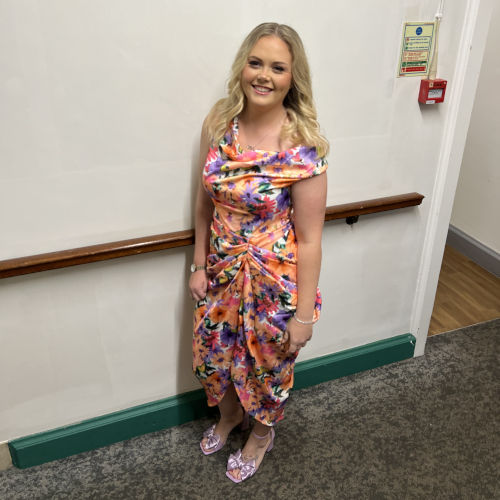
My speech therapy has helped me so much and singing helps too.
Kayleigh, stroke survivor
Speech and language therapy
Speech and language therapy aims to help improve the ability to communicate. It isn’t just about ‘fixing’ problems so that someone can speak as well as they used to. It’s also about gaining confidence, learning to communicate in new ways and adapting to life with communication difficulties. Speech and language therapists should also offer training to help family members and carers learn how to support and communicate with the stroke survivor.
How do you get speech and language therapy?
Speech and language therapy often begins in hospital but carries on after the person leaves hospital. Someone can also have therapy if new needs emerge some time after a stroke. UK national guidelines say people should have up to 45 minutes per day of all the therapies they need. However, the amount of therapy someone gets may vary between areas of the UK. It can depend on the availability of local resources.
If someone is not getting all the help they need, or they have new support needs, contact their GP. If you’re unhappy with the level of therapy provided through the hospital, contact the hospital Patient Advice and Liaison Service (PALS). They will respond to complaints and feedback. Our Stroke Support Helpline can give you ideas for getting the support you need.
How long does therapy last?
Ideally, therapy should continue until someone has achieved their goals. However, people sometimes find their speech and language therapy ends before they feel ready. Studies suggest many people receive less therapy than national guidelines recommend, and that the amount can vary by where you live.
Knowing they’re no longer going to have regular advice and support from a speech and language therapist can cause some anxiety. However, recovery doesn’t end with therapy. As the person continues to practise, they will probably continue to improve their skills and confidence.
What happens after speech and language therapy?
The speech and language therapist should explain the kinds of communication support available, including peer support where the stroke survivor can connect with people in a similar situation, and they can refer someone to services. The therapist should also explain what to do if someone needs more therapy in future.
Volunteering can be a good way to practise communication, increase confidence and improve wellbeing. Someone can practise with family at home, and there are also workbooks and apps for recording communication goals.
Speech and language therapists can provide information about life after stroke. This information should be provided at a level the person can read and understand.
How does therapy help recovery?
Therapy can help recovery through a process known as neuroplasticity. This is where your brain has the ability to re-wire itself, allowing you to improve skills such as walking, talking and using your affected arm. It begins after a stroke and it can continue for years.
Find out more about neuroplasticity.
- Helps with goal setting: A speech and language therapist will assess the person, and work with them and their family or carers to set goals for what they want to achieve. This could include things like being able to chat more easily with their family, speaking on the phone and asking for things in a shop. It can also include relearning skills for reading, writing and using numbers.
- Improves language skills: Therapists help someone relearn language skills such as linking objects and ideas, and linking words and their meanings. Tasks can be spoken, on paper or on a computer or tablet. Learning activities can include:
- Matching words (written or spoken) to pictures.
- Sorting out words by meaning.
- Retrieving the words for pictures.
- Putting words into categories.
- Identifying rhyming words.
- Constructing sentences or having conversations.
- Helps you find new ways to communicate: Sometimes the focus of therapy is on compensation or coping strategies, such as using non-verbal methods for communication. This can include anything that helps to get a message across, such as using technology, hand gestures, alphabet charts and notebooks. You might hear the term ‘augmentative and alternative communication’ (AAC) used to describe some techniques and tools used to support the person. The Royal College of Speech and Language Therapists has information on different types of AAC.
- Supports family and friends too: A speech and language therapist can offer education, information and strategies to family and friends, to try to help you find ways to communicate more easily. This might include videoing conversations between the person with aphasia and a family member, and giving feedback on what works well and what you might try differently to help - for example, writing down words as you talk.
- Improves confidence: Speech and language therapy helps to build confidence, so someone feels able to join in conversations, talk to new people and do things they want to do. Meeting other stroke survivors with communication problems, such as at support groups, can also help with increasing confidence and making connections with others. Speech and language therapy isn’t just about the time spent with the therapist. Improvements and making progress will only come with practice. The therapist should agree ways with the stroke survivor to help them practise what they’ve learned outside of sessions.
What about private therapy?
Using a private speech and language therapist (SLT) may be an option if someone has private health insurance, or the ability to pay for sessions themselves.
They should look for someone who has experience of working with people who have had a stroke. To find a private SLT, you can check the Association of Speech and Language Therapists in Independent Practice. All practising SLTs must be registered with the Health and Care Professions Council (HCPC). Check the SLT you have chosen is registered on the HCPC website.
I’ve had to teach myself how to read again by listening to audio books and reading along. I’ve also been attending my local Stroke Association Communication Group. It’s brilliant and it’s really helping me.
Paul, stroke survivor

Are there aids and equipment that can help?
A speech and language therapist will recommend equipment and apps for supporting communication. Some examples include:
- Carrying a pen and notebook so they and the person they are speaking to can use drawing and writing to communicate.
- Using technology, such as a mobile phone or tablet.
Communication card
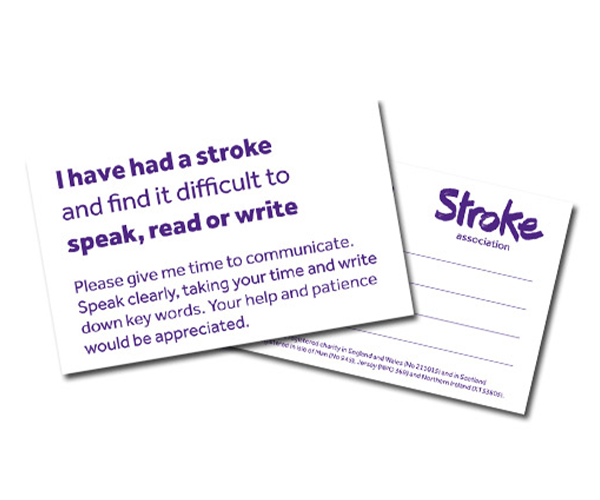
This is a card someone can show to explain they have problems communicating. It’s usually small enough to fit in a wallet or purse. You can order one from our Shop.
Communication passport
This is a document that gives important information about the person with aphasia. Everything from the kind of communication problems they have and the medication they take, to likes and dislikes, and where they come from. This can be especially helpful if someone often meets new people or has several carers. Anyone can make their own communication passport, although there are many templates available to help. Here is an example template.
Apps and computer programmes
An app (or application) is a piece of software on your smartphone or tablet. Some apps can help you with communication, while others help with practical activities like banking and shopping. Apps can also be used for fun, such as games and music.
There are apps and computer programmes for practising speech and language exercises. This kind of computer-based therapy works best with some guidance from a speech and language therapist.
Many apps are free or free to try out, but others you have to buy or pay a monthly subscription fee. The therapy team will advise which apps could help.
Mobile devices and computers have many useful features as standard. See our list of ideas for using technology to communicate.
Charts and books
Paper-based communication supports include alphabet boards, communication charts and books. They display large letters or words, and can include sets of pictures, photos or symbols to point to. Some people find symbol sets useful. Symbols are graphic representations of words and can be helpful for people who have difficulty reading or spelling. There are many symbol sets available, covering a range of different topics.
Electronic aids
Voice output communication aids (VOCAs) are devices that can help if someone has problems speaking clearly. They use a computer-generated voice to play a message aloud. Some work by pressing a button to play a prerecorded message, like “How are you?”, and others have a keyboard to create a message for the VOCA to read aloud. The Communication Matters charity has information about getting help with an augmented and alternative communication (AAC) assessment.
There are apps and therapy programmes specifically for communication problems. The Aphasia Software Finder has information about what’s available. We also have details of aphasia therapy apps you can take a look at.
Using technology
Modern technology offers a range of options to help people to communicate. Computers, mobile devices and smart speakers can all be used in different ways to access things someone needs and help with conversations.
Touch-screen devices like phones and tablets usually have built-in accessibility software, as well as standard apps such as a camera and audio recording.
Examples of ways to use a mobile phone or tablet include:
- Set the device to speak the text on screen.
- Set the device to be voice-controlled and carry out instructions, such as web searches or sending messages.
- Use a device to pre-record spoken messages to use in different situations.
- Take photos of objects to show people things you need or help explain things.
- The calendar app can help with setting a routine and send reminders for appointments.
- List and reminder apps can help to remember words and tasks. These can also work with voice control if someone struggles with typing.
- Some video calling apps let you add instant subtitles which can help with comprehension.
Getting online
View our free guide to support people with aphasia to get online. You can also call our Stroke Support Helpline for a print copy.
AbilityNet
AbilityNet is a charity which helps disabled people use technology. Call the helpline on 0300 180 0028.