
It can be difficult to know how to help someone when they’re finding communication difficult.
We have information, tips and strategies to support you communicating with someone after stroke.
We also have additional tips you can share with someone who has aphasia.
Tips for family and friends
1. Get involved
If your family member or friend isn’t able to communicate in the same ways as before, then you’re going to need to learn new ways to do it too. Ask them what helps. Go to their speech and language therapy sessions if you can, or ask their speech and language therapist for information and training as a communication partner.
2. Work together
Many people with communication problems say they feel invisible or people aren’t interested in what they have to say. So make sure your family member or friend is included in your conversations – whether it’s an argument, an important decision, or simply a chat about what’s happening that week. If they meet someone new, make sure they are introduced and included in the conversation.
3. Be patient
All relationships rely on communication so it can be very hard when it suddenly becomes difficult. Communication problems can affect relationships between partners and spouses, but help is available. We have more information about changes to intimate relationships.
4. Support their independence
You might need to support someone to start with, by doing things like answering the phone or going to appointments with them. But as their communication begins to improve, encourage them to start doing more things on their own if they can. Ask them what they’d find helpful.
5. Make time
People can feel very lonely and isolated when they’re not able to talk or go out in the same way they used to. Simply spending time with someone can really help. Make an effort to talk to them about how they’re coping. Find something you can do together that doesn’t require as much chat, like cooking a meal or playing a familiar game.
6. Get support for yourself
It’s important to look after yourself and your own wellbeing too. Talking to others who understand your situation may help. Our Stroke Support Groups can connect you with others supporting someone after a stroke.

How to have good conversations
When you’re talking to someone, it’s up to both of you to make sure the conversation is a good one. This doesn’t change if one of you has communication problems. It may make your conversation a bit more difficult, but it can still be enjoyable and help you to feel close. These are our tips to help you.
Before you start
- Reduce distractions and background noise. Remove distractions like mobile phones, and make sure you’re not under any other pressures, so you can give each other your full attention.
- Choose a good moment. Ask them to pick a time when they have enough energy and concentration to talk. Stroke can cause fatigue, which can be worse in the afternoon.
- Focus on what you’re doing. Look as if you’re ready to talk, sit close to or opposite each other and make eye contact. It’s easier to have a one-to-one conversation than a group chat. If you’re meeting as a group, you might need a ‘chairperson’ who can manage the conversation and make sure one person speaks at a time.
- Don’t worry. Conversations are about sharing and understanding each other, so it doesn’t matter how you do it or how long it takes. Be ready to make mistakes, you just have to keep trying.
- Get ready to listen. The best conversations involve everybody equally, so good communication is as much about listening as it is talking.
- Have resources ready. Have a pen and paper handy, and anything else you think that can support communication. For example, photos on your phone, a photo album, a calendar, magazines or books you want to talk about. Perhaps you have pictures from your holiday you can talk about.

During your conversations
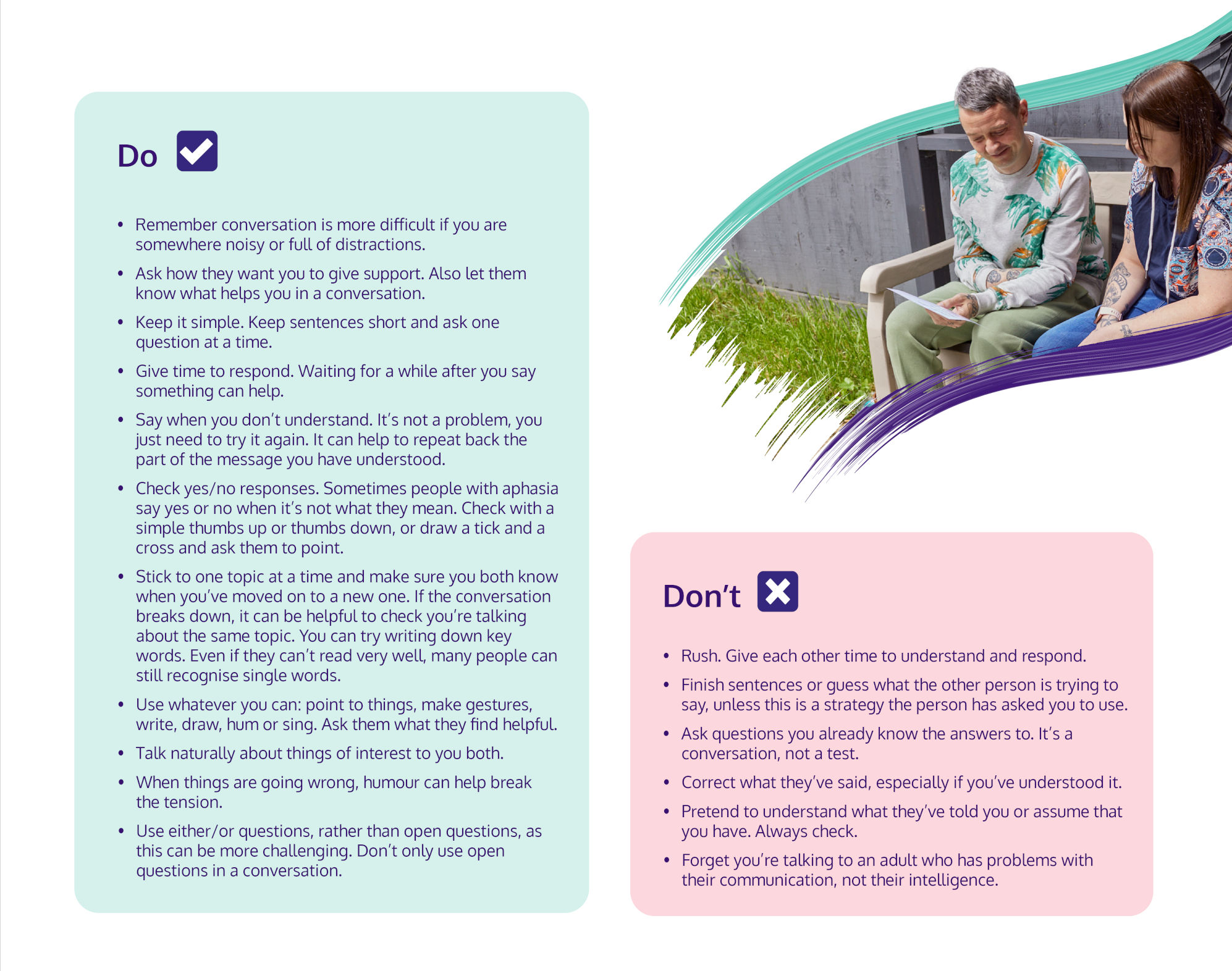
Other helpful tips to keep in mind:
- If your conversation partner is struggling to think of a word, ask them to spell it, write it down, draw it, point to it or what letter it begins with on an alphabet chart. You can also encourage them to ’talk around it’ by describing it and using their communication book if they have one.
- After formal conversations, like a work meeting, it can be helpful to write down and share key points. In a medical appointment, it might help to write down key points and anything agreed.
Free online training for better conversations
Aphasia experts at University College London have produced a free e-learning Better Conversations with Aphasia resource. It is aimed at family and friends, people with aphasia, and professionals supporting them.
Free online training at Communication Access UK
The Communication Access UK initiative has developed the Communication Access Symbol and training to support inclusive communication. Find out more.