
You can have your blood pressure checked at a clinic, GP surgery or pharmacy. You can also do it yourself at home.
If you have your blood pressure checked by a healthcare professional such as a GP, they may take more than one reading. If they think
you may have high blood pressure, you may:
- Be given a small monitor to wear at home which measures your blood pressure at regular intervals over 24 hours.
- Be advised on how to use a blood pressure machine to take your own readings at home.
You often need several readings to check the results over time. This allows your healthcare professional to calculate your average reading,
as blood pressure varies during the day.
If you have had a stroke or TIA, your blood pressure will be checked by a healthcare professional at hospital. You will be given any treatment and advice you need to help lower high blood pressure and reduce your risk of another stroke.
Understanding your blood pressure reading
Your blood pressure reading is recorded as two numbers:
- Systolic: the pressure when your heart beats.
- Diastolic: the pressure in between heartbeats.
Both numbers are equally important, and blood pressure is counted as being high if either number is high.
What do the numbers mean?
Blood pressure is measured in “millimetres of mercury”, written as ‘mmHg’. For example: 90/60 mmHg. You may hear your doctor say this as ‘90 over 60.’
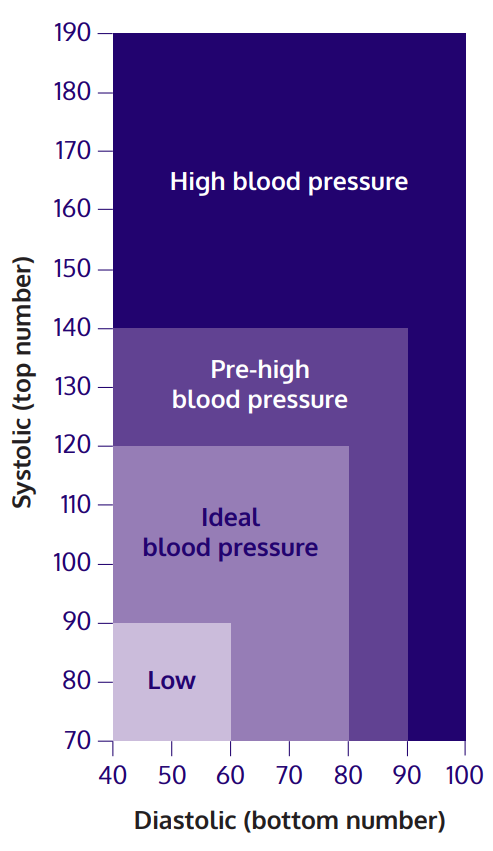
The ideal blood pressure is usually between 90/60 mmHg and 120/80 mmHg.
This chart gives a general overview of blood pressure measurements. Look for where your systolic and diastolic number meet on the chart
How is high blood pressure diagnosed?
High blood pressure is generally diagnosed if:
- It’s above 140/90 mmHg when measured by a health professional. They may take more than one reading.
- You’re aged over 80, and your blood pressure is over 150/90 mmHg when measured by a health professional.
- It averages above 135/85mmHg when you measure it at home (or an average of 145/85mmHg if you are aged over 80 and measuring it at home.)
If your blood pressure is usually between 121/81 and 139/89, it may be considered the high end of normal. You may be advised to do things like make healthy lifestyle changes, to help reduce your risk of developing high blood pressure.
If you have conditions such as diabetes or kidney disease, you might be offered medication at 130/80.
If you’ve had a stroke or a TIA and your doctor has measured your systolic blood pressure to be 130 mmHg or more, you may be prescribed medication to bring it down. Your doctor can advise you on the target for your blood pressure and any treatment you need.
Why is the target level lower for home blood pressure testing?
Some people can have a higher reading if they feel anxious about seeing a medical professional. This is sometimes called the ‘white coat effect’. Home blood pressure test results are likely to be lower, so the cut-off point for diagnosis needs to be lower.