
What is an ischaemic stroke?
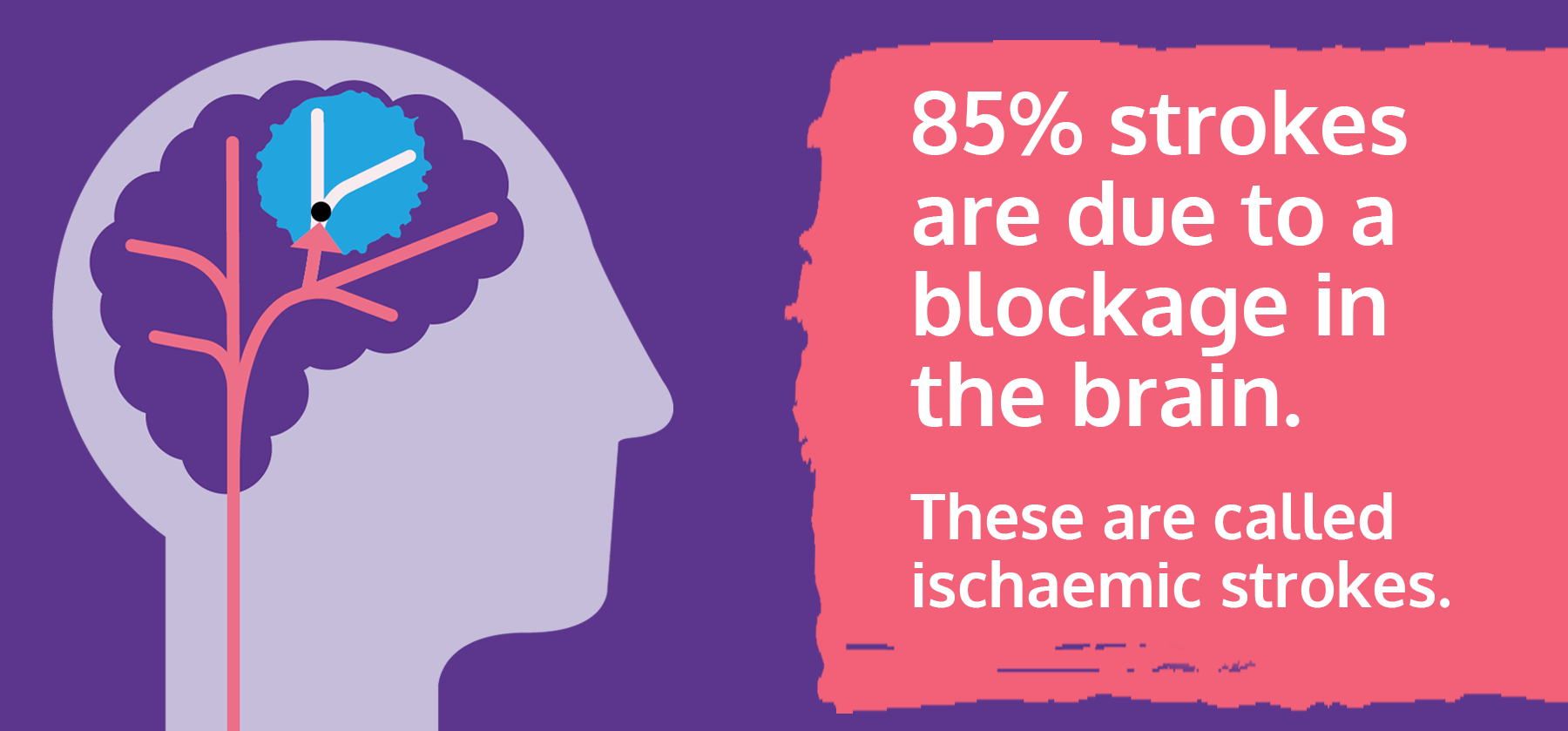
An ischaemic stroke happens when a blockage cuts off the blood supply to part of your brain, killing brain cells. Damage to brain cells can affect how the body works. It can also change how you think, feel and communicate.
It’s the most common type of stroke. Around 85% of strokes in the UK are ischaemic strokes. The other 15% of strokes are due to bleeding in or around the brain, known as haemorrhagic stroke.
If you have an ischaemic stroke, you will be given specialist care and treatment, including medication to reduce your risk of another stroke. Afterwards, you should have support for your recovery. This may include medical treatment and rehabilitation therapy.

A transient ischaemic attack (TIA or ministroke) is similar to an ischaemic stroke, but the symptoms only last for a few minutes or hours. It’s a major warning sign for a subsequent stroke and should always be taken seriously.
Stroke Support Helpline
Our Stroke Support Helpline is for anyone affected by a stroke, including family, friends and carers. The Helpline can give you information and support on any aspect of stroke.
Call us on 0303 3033 100, from a textphone 18001 0303 3033 100 or email helpline@stroke.org.uk
Accessible formats
Access this section's content in various offline formats:
- Download our PDF or large print Word document.
- Order your printed copy from our Shop.
- Request a braille or CD copy by emailing feedback@stroke.org.uk.