
Why is this research needed?
Anaemias are conditions that affect the red blood cells, making them less able to carry oxygen around the body. One type of anaemia is sickle cell anaemia, a genetic condition that affects more than 4 million people around the world. Healthy red blood cells are usually round and quite flexible, so they can move around the bloodstream easily. However, in people with sickle cell anaemia, some red blood cells (‘sickle cells’) are shaped more like crescent moons, and they’re not very flexible.
People with sickle cell anaemia are at increased risk of lots of other conditions. Two of those conditions are ischaemic (clotting) stroke and haemorrhagic (bleeding) stroke, because sickle cells are more likely to form clots and more likely to damage the blood vessels than healthy red blood cells.
The only cure for sickle cell anaemia is a stem cell or bone marrow transplant from a healthy donor, but this isn’t possible or safe for everyone. That means that people with sickle cell anaemia have to live with an increased risk of stroke compared to others, from early childhood on. Children who have sickle cell anaemia are 100 times more likely to have a stroke than children who don’t.
In her Postgraduate Fellowship, Shifa Hamdule is investigating the links between sickle cell anaemia, stroke, and sleep-disordered breathing in young adults – that is, unusual patterns of breathing that happen while you’re asleep, such as stopping and starting breathing. Sleep-disordered breathing seems to be more common young people with sickle cell anaemia and young people who’ve had a stroke, and it can increase the risk of having another stroke.
What are the aims of this research?
“We do not know the exact prevalence of sleep-disordered breathing in people with sickle cell anaemia, especially in young stroke survivors,” says Shifa. “We also do not know how sleep disordered breathing impacts brain structure, thinking and memory abilities and mental health in all young stroke survivors. I want to investigate if there is a link between sleep disordered breathing and brain function, thinking and memory abilities, and mental health.”
To find the answers to her research questions, Shifa is looking for young adults who’ve had a stroke. Participants in her study will be asked to do a range of questionnaires and scans. These include tests for sleep-disordered breathing, mental health assessments, and brain scans. She aims to find about 70 participants for her research, of whom around half have sickle cell anaemia and half don’t. She thinks that the impact of sleep-disordered breathing on brain function, thinking, memory and mental health could be worse for stroke survivors with sickle cell anaemia.
What is the benefit of this research?
“Sleep hygiene is an underrated modifiable factor in most people’s lives,” says Shifa. “We hope to bring awareness and action backed by scientific evidence towards better and healthier sleep practices.”
Shifa’s work will help us better understand the impacts of sleep-disordered breathing for young stroke survivors, and whether existing treatments for this condition help reduce those impacts. In the longer term, Shifa hopes that her work could lead to changes to clinical practice that help young stroke survivors, especially those with sickle cell anaemia, experience better quality of life.
While Shifa’s research is taking place in the UK, its consequences are likely to be global. Sickle cell anaemia is more common in southern and western Africa and in people of African and Caribbean ancestry living around the world. Shifa says, “Sleep disordered breathing is simple to monitor and treatments already exist that can be used to reduce its impact on brain function and prevent secondary strokes. This makes it globally applicable even in countries where immediate stroke assistance is of poor quality.”
What PSP priorities does this research link to?
From 2019 to 2021, we worked with the James Lind Alliance on the Stroke Priority Setting Partnership (PSP). During the PSP process, we collaborated with people with lived experience of stroke and stroke professionals to find out what they thought were the top priorities in stroke research. From this, we identified the top ten priorities in two areas: prevention, diagnosis and short-term care, and rehabilitation and long-term care.
Now, when researchers apply to us for funding, we require that their work addresses at least one of these priorities, or a priority from the Childhood Neurological Disabilities PSP Top 10 as it relates to childhood stroke.
Shifa’s project addresses the following priorities from the Stroke PSP:
- Prevention and acute 1: Primary prevention
- Prevention and acute 5: Secondary prevention
- Prevention and acute 8: Reducing complications of stroke
- Prevention and acute 10: Effects of other health conditions and characteristics on stroke symptoms, outcomes, treatments and care
Meet the researcher
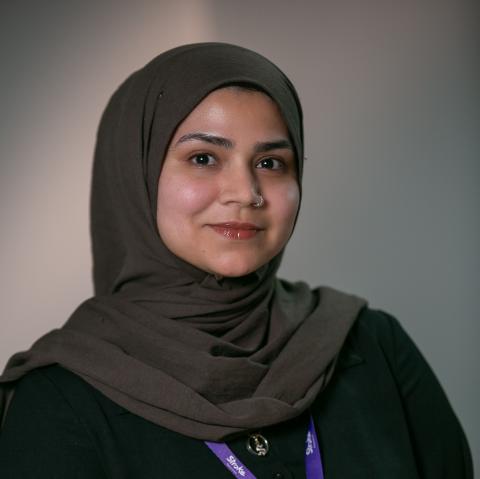
Shifa Hamdule is a PhD student at University College London. She previously worked as a mental health trainee practitioner in a neurorehabilitation centre in India, which sparked her interest in stroke. After completing an MSc in Applied Paediatric Neuropsychology at University College London, she became a research assistant, working in the same team where she is now a PhD student.
Shifa says, “My career aim is to be a leading academic in stroke research. In the short term, I would like to complete my project and publish articles in scientific journals that will help me establish credibility as a scientist. In the long term, I aspire to secure a faculty position and run my own research lab.”
Shifa’s supervisors are Fenella Kirkham, Professor of Paediatric Neurology at University College London; Dr Anna Hood, clinical health psychologist and Lecturer in Psychology at the University of Manchester; Chris Clark, Professor of Imaging and Biophysics at University College London; and Dr Johanna Gavlak at University Hospital Southampton.