
Help shape our work
The Stroke Association’s Digital Voices Group meets monthly online. Click below if you’re a stroke survivor or carer interested in getting involved with the Stroke Association’s work.
Learn moreAlexandra shares her experiences of working with our digital involvement group. She is a conversation partner for a wheelchair-user parent with post-stroke aphasia, as well as a clinically practising Speech and Language Therapist & NIHR-funded researcher.
When the Stroke Association invited me to join the Digital Voices Group in November 2024, I immediately agreed. I had just qualified as a speech & language therapist after four years of study and had been part of the Involvement Group since 2021 as a carer for my mother after her stroke, shaping resources and content. Being asked to help review and strengthen the organisation’s digital presence felt
like a natural next step.
What I did not expect was just how much I would gain personally from joining.
The Digital Voices Group is a small, monthly gathering of no more than eight of us at any single meeting. It is made up of stroke survivors and carers who meet online to help the Stroke Association improve its digital presence.
It is chaired by the organisation’s User Experience Manager, Christina, and each session has a clear focus. Either Christina brings us something she wants us to troubleshoot and provide feedback on, or one of her colleagues presents a specific topic to get our perspective.
It is a working group in the truest sense. We’re not there to rubber-stamp decisions that have already been made. We’re there to interrogate, push back, question, and offer the kind of insight that only comes from lived experience.
Over the months, we have also bonded as friends. We know each other’s strengths, backgrounds, and pet hates, and we remember. Our lives have interwoven in the way that happens when people show up together regularly and speak honestly. We know instinctively who might be best placed to answer or advise on whatever Christina throws at us.
Our April meeting is a good example. The topic was the Stroke Association’s online forum, a peer support community for survivors and carers. We were asked to review what works, what doesn’t, and what could improve.
What followed was a typically rich conversation. Around half of us had no prior experience of using online forums at all; some had faced real barriers post-stroke: difficulty using a computer, limited digital confidence, the overwhelm that comes with navigating new technology when you’re already exhausted by what’s happened. Others had found the forum a lifeline: a place to feel less alone, to start posting, to begin supporting others in turn.
We did a live walkthrough together and gave our feedback.
We talked about what it feels like to arrive at a website in crisis, already overwhelmed, and find something that adds to that overwhelm rather than eases it.
And we offered practical suggestions, things the team at Stroke Association could act on. The conversation felt meaningful because it was grounded in real experience.
Every online gathering opens with Christina updating us on what’s been achieved since the last one. It is a standing agenda item named ‘You Spoke, We’re Working On It’. It’s a simple thing, but it sets the tone from the start. You arrive not only knowing that what you said last time was heard, but that something was done about it.
For example, ‘Life After Stroke’ was one section title we flagged as too vague because it didn’t tell users what they’d actually find there, and so it is already under review. A suggestion to add a filter feature to the Support and Guidance pages has been implemented. These aren’t dramatic overhauls, but they are real, traceable changes to a website used by hundreds of thousands of people every year, and they came directly from this group.
Our opening update matters more than it might sound. It’s the difference between involvement that feels performative and involvement that has genuine weight. You leave each meeting knowing your contribution didn’t get lost in a spreadsheet somewhere.
The group is small by design, and that intimacy is part of what makes it work.
You don’t need a background in digital communications or technology. The value comes precisely from the range of experiences people bring. There are those who are digitally confident and those who aren’t, those who found the Stroke Association’s resources easily and those who didn’t.
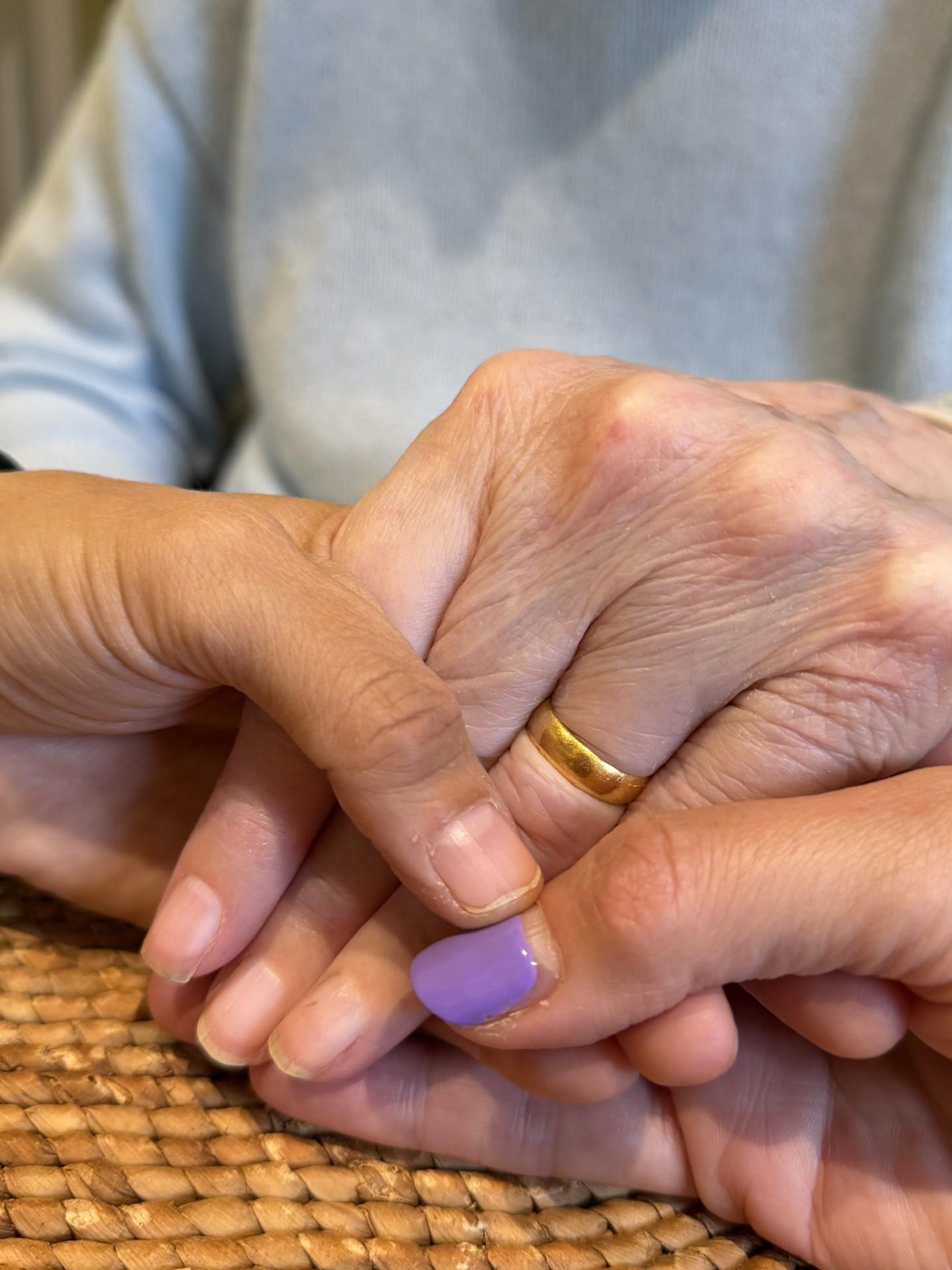
I’m one of two carers in the group. The other attends alongside their spouse, who is a stroke survivor. This means that in some sessions, you have a carer and survivor perspective sitting right next to each other, sometimes literally. That dynamic enriches the conversation in ways that are hard to manufacture.
I came to this work as the family carer of a stroke survivor with aphasia, and I trained as a Speech and Language Therapist partly because of that experience. I now work clinically with people living with acquired brain injury and with neurodivergent college-age students. Every month, when I join the Digital Voices Group meeting, I bring the perspectives of people who are least likely to be in the room.
When we review a webpage or discuss how information is presented, I repeatedly think about access for my mother, who no longer uses her tablet and relies on others to look things up, people for whom English is an additional language, those who are visually impaired, and those who need plain language, not dense clinical text. Their needs are just as real, and sometimes more acute.
Holding their perspective in the room feels not just part of the point; it feels the whole point.
The Stroke Association reaches people in their moments of need. Getting the digital experience right for both the majority and minority isn’t a “nice to have”; it’s a fundamental part of the care they take and give to every visitor to their website. Being part of a vocal group that helps to make that happen, each of us knowing that our noisy input will be visibly acted upon to support those who come after us, is, quietly, a privilege.
The Stroke Association’s Digital Voices Group meets monthly online. Click below if you’re a stroke survivor or carer interested in getting involved with the Stroke Association’s work.
Learn more
A 34-year-old mum from Chester is sharing her story after having…
Stroke survivor Louise, 30 from Wigan, has worked with the…
An eight-year-old talented footballer from West Yorkshire…