
Why is this research needed?
Imagine you’re doing physiotherapy exercises to help you recover the use of your arm after a stroke. You are finding it very hard to focus, because your stroke has also affected your thinking and memory (cognitive) skills. The exercises themselves are going well, but the difficulty you’re having paying attention to what you’re doing is making it hard to stay engaged with what you’re doing.
Cognitive challenges like difficulty with focusing are very common after stroke. They can have all sorts of impacts, including interfering with your recovery from other effects of stroke.
For this reason, stroke guidelines recommend that rehab for cognitive difficulties is integrated with physical rehab. Unfortunately, data from the Sentinel Stroke National Audit Programme reveals that this is far from the case. In many cases, this is because a stroke unit doesn’t have a neuropsychologist, a specialist in supporting people dealing with cognitive difficulties.
Faye Tabone says, “The role of cognitive difficulties in stroke recovery and how they affect participation in rehabilitation is not studied enough and needs urgent attention. By combining cognitive and physical rehabilitation, and refining it with input from those affected, we can improve post-stroke recovery.”
What are the aims of this research?
To start, Faye is investigating what kinds of interventions stroke clinicians are already using to support stroke survivors dealing with cognitive challenges during physical rehab. This will involve reviewing the academic literature on the interventions, and doing interviews with stroke survivors and stroke rehab professionals. Faye wants to understand what kinds of cognitive difficulties stroke survivors face in physical rehab, how effective any existing interventions are, and how stroke survivors and healthcare professionals think these difficulties could be managed to make it easier to engage with physical rehab.
She’ll then work with the stroke community to create a toolkit that stroke survivors, stroke rehab professionals and carers can use to work through thinking and memory difficulties in physical therapy settings.
Finally, Faye will test the new toolkit with stroke survivors at the Oxford Stroke Rehab Unit, to understand whether it’s doing what she intends – making it easier for stroke survivors with cognitive difficulties to engage in physiotherapy.
What is the benefit of this research?
During her Postgraduate Fellowship, Faye will not only improve our knowledge about the impacts of cognitive difficulties on physical rehab after stroke. She’ll also start developing a way that stroke survivors, healthcare professionals and carers can work together to manage these difficulties. Ultimately, her work should help more stroke survivors to get the most out of physical therapy.
Faye says, “While previous research has focused on assessing and detecting cognitive difficulties after a stroke, there has been less emphasis on finding practical, short-term solutions that don't require specialist delivery. By developing CARES, we aim to create a resource accessible to everyone, offering education on these challenges and improving rehabilitation approaches. Although interventions by psychologists for all are the ideal, this isn't currently the reality, and CARES seeks to bridge that gap.”
What PSP priorities does this research link to?
From 2019 to 2021, we worked with the James Lind Alliance on the Stroke Priority Setting Partnership (PSP). During the PSP process, we collaborated with people with lived experience of stroke and stroke professionals to find out what they thought were the top priorities in stroke research. From this, we identified the top ten priorities in two areas: prevention, diagnosis and short-term care, and rehabilitation and long-term care.
Now, when researchers apply to us for funding, we require that their work addresses at least one of these priorities, or a priority from the Childhood Neurological Disabilities PSP Top 10 as it relates to childhood stroke.
Faye’s project addresses the following priority from the Stroke PSP:
- Rehab and long-term 1: Mental and emotional (psychological) difficulties after stroke
- Rehab and long-term 2: Thinking and memory (cognitive) difficulties after stroke
Meet the researcher
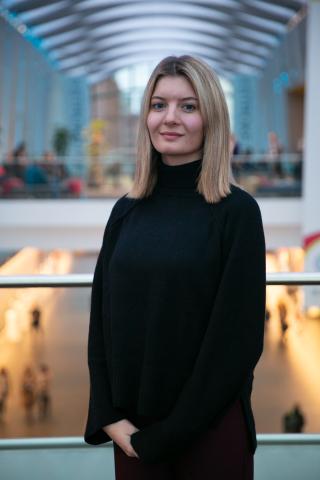
Faye is a PhD student in the Division of Clinical Neurosciences at the University of Oxford. Prior to her PhD, she worked as a research assistant at the University of Oxford and did a research internship at University College London. She is also the co-ordinator for the Oxford Stroke Recovery Research Hub.
Faye’s supervisors are Professor Nele Demeyere and Professor Charlotte Stagg, both at the University of Oxford.
After her PhD, Faye hopes to expand on CARES, running a feasibility study that will bring her new intervention one step closer to clinical practice.